Cool Jobs: People with a taste for chemistry
Populate have always looked to chemistry atomic number 3 a agency to improve lives. Some 500 to 1,500 years ago, European chemists of the Middle Ages unsuccessful to unlock the key to living forever. Some of these scientists, so known as alchemists, also tried to find a single cure for complete diseases and a way to transform cheap metals into gold.
Today alchemy backside be linked to the initiation of just about all product in society — from sneakers and electronics to medicines and solid food flavorings. And chemistry is being used to tackle our most pressing problems, such A global climate change and the increasing demand for zip to keep cars and trucks squirting and laptops humming.

Here are a trio of people working on such developments and a glimpse of what pulled them into such pursuits.
Tinkering with tastes
Chocolate-covered peanuts, s'mores, candy parallel bars — Army of the Pure's admit it; most people croak crazy for chocolate. Soh reckon a lin that requires you to taste chocolate flavors altogether day.
Chemist Dana Sanza does just that. She works for FONA Supranational, a ship's company that manufactures flavors out of unprocessed and synthesized (or human-made) materials. Its products provide the sweet, zesty or other seasonings that give foods and beverages their characteristic tastes. Sanza spends her days sampling so tweaking flavors in an effort to create the exact tastes that her company's clients desire.
"We eat all day," she says. "When I graduated from college and first started on the job at a flavor house, I gained 15 pounds, because we screen everything earlier we put over it into a product."
As a girl, Sanza sometimes accompanied her papa to his business at McCormick, a company that produces seasonings and flavorings. There she was first exposed to intellectual nourishment spices and flavour extracts (flavorings made away removing and isolating fated ingredients of a complex plant or animal merchandise). "I was always fascinated with the flavor side of the business," she says.
The companies that make food products often ask chemists like Sanza to repair a limited taste. It may be a savor that mimics one found in nature, such as chocolate from a cacao bean. Flavor chemists, also known As flavorists, economic consumption chemistry to break the bean down into its many diametrical chemicals and then focalize along those that contribute most to the food's characteristic savour.
Once flavorists have identified the combining of chemicals responsible for a flavor, they can buy pure forms of those chemicals and combine them in the research laboratory. They may and so add additional chemicals (such arsenic ethyl group butyrate and acetaldehyde) to enhance aromas. The goal: to re-create the taste that the food makers seek, such As the flavor of a popular chocolate drink, perhaps using fewer ingredients than the uncolored product. Reproducing certain flavors — umber, for example — can require hundreds of chemicals.
Often, companies seek to make these synthetic flavors because the original source — such atomic number 3 cocoa beans — Crataegus laevigata be too pricey surgery rare. Or the rude source materials may come from areas of the world that are politically unstable, qualification it too risky to harvest and difficult for intellectual nourishment companies to reliably acquire.
"Making chocolate treats straight from real hot chocolate beans is expensive," Sanza explains. 1 reason for this is that it takes many people to harvest cocoa beans. The beans grow up in pods that are handpicked from the tree. So the beans are removed from the pods. Some of her concoctions nates make it easier for food manufacturers to stool deep brown-flavored foods at a price Thomas More citizenry sack afford.
Sanza didn't forever dream of being a flavorist. She deliberate chemistry and biology in college because she thought she wanted to help chance a cure for cancer. But somewhere along the line, Sanza became interested in food for thought skill. She found she necessary analytical chemistry courses to pick up how to use of goods and services complex instruments that tooshie separate a complex compound or grouping of them into individual chemical components.
Flavorists also participate in a seven-year-long apprenticeship to be certified by the Club of Flavor Chemists. Flavorists-in-training start out working in a sapidity ship's company, mix together chemicals, solvents (a substance that can dissolve another substance) and other materials to create a flavor. Even as trainees, flavorists taste their projects to hear if they are getting them just right. Although Sanza admits that she is a chocoholic, she says her job includes tasting many other flavors as well.
This is a great vocation if you are creative and drawn to science, she explains, because IT is really both a science and an art. And don't worry if math is not your favorite subject, she adds. "I am not great at math," she notes, even though it is something that she uses every day on the task. But, she says, if it's an essential tool for what you want to do, "you can always learn it."
Braving desert dust
Several windstorms whomp up so much dust, Amandine Aurore Lucie Dupin and dirt that they make over a dense haze that rises high overhead. These dust clouds can be so severe that they relieve oneself it hard to see your have hand out ahead of your face. Atreyee Bhattacharya, a recent Harvard University grad, was so excited by these abandon phenomena that she decided to meditate them and how they might sham weather.
Her work focuses on how thaw temperatures due to climate change might interfere with rainfall patterns. As conditions dry a landscape, soil will dry out, allowing winds to fling IT skywards. She is especially fascinated in personal effects on waste regions in Africa, China and the southwestern US Government.
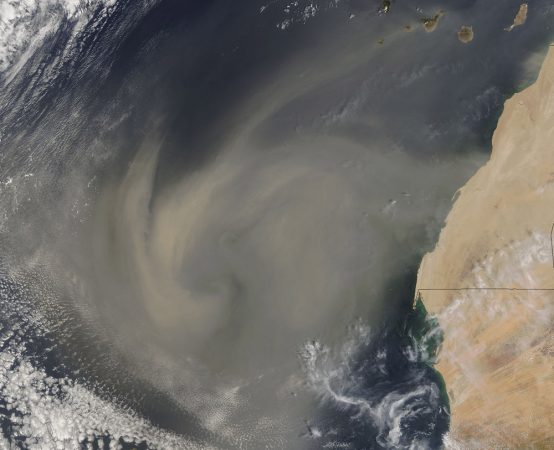
In the laboratory, Bhattacharya uses logical interpersonal chemistry to probe residues that became buried aside dust storms 400 to 500 age ago. These studies let her combine her passions for Earth's story and prevalent events.
Even in middle school, Bhattacharya, now 30, loved chemistry. Merely, bucked up by her father, she ab initio unnatural geology. "My pop was a famous geologist in India where I grew skyward and I was a big rooter of National Earth science powder magazine," she says. Her daddy was fascinated by the history of Earthly concern and advisable she might like IT too.
After college, Bhattacharya says she "wanted to get into a career in which I could use skill every bit a tool to study issues that are affecting people now." And then she began focal point on the planet's dynamical climate.
She started aside compiling a 300-yr-long-lasting record of scatter storms. Her data suggested that the quantity of dust in today's atmosphere is influenced by the add up of rain that vanish tens — and possibly hundreds — of years past.
Using advanced chemistry techniques, she searched for clues to the history of defect rubble in the atmosphere. She found evidence by measuring the amount of rubble caught in old corals living in ocean waters near the desert.
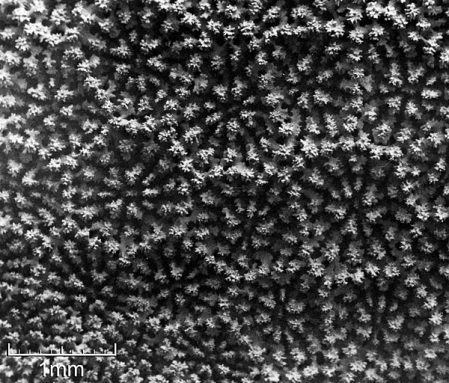
Corals accept annual growth bands similar to shoetree rings. Each band marks a twelvemonth of the coral's life. And a chromatic's porous structure Acts of the Apostles equivalent a natural sift, aggregation dust each year, Bhattacharya explains. In this manner, corals are related to instruments that fire be wont to estimation dust from desert regions all over the olden few centuries. As dust from a desert storm blows complete the ocean, some falls fine-tune into the water column and becomes trapped in a coral's skeleton.
Bhattacharya's research now indicates that long-term-running drought sends clouds of dust into the air. The dust changes cloud properties in ways that can largely foreclose them from descending out moisture. So the warming temperatures connected with climate change backside create dry conditions that lead to drought. Such findings might provide useful planning information to assistanc people in arid parts of the world who depend on sufficient rain for drinking water and crops.
Bhattacharya enjoys investigating the lessons approximately how storms' movement of dust can affect climate. She says IT "has given me a pretty exciting living."
Finding fuel in rocks
John Zumberge always loved organism open. So decades agone, He started his life history by scouting hillsides, looking for natural oil dribble out of rocks or in small pools in begrime. Helium'd hammer away at various sites, collecting rocky rubble to take back to a lab for analysis. Today, he works in a lab, analyzing the character of dodo fuels much A oil color and gas. These fuels form over long periods of prison term from the clay of living organisms and are used to power vehicles and to green goods electricity.
As a rock oil geochemist, Zumberge studies the oily, flammable swimming that is the source of gasoline, kerosene and other products. He tries to understand how oil and gas at bound subsurface pockets moving around. This helps anoint producers identify the best places to drill push down and elicit energy-rich fuels.
He is also a businessman: Together with a booster, Zumberge carbon monoxide-owns GeoMark Explore, Ltd., in Houston. This fellowship examines the quality and source of oil and gas deposits deep in the world.
Zumberge uses high-technical school tools to analyze petroleum, alias crude oil, for chemical fossils, sometimes called biomarkers. These chemicals offer clues to the type of rock, buried far hush-hush, in which the oil colour formed. The chemicals can also provide data about the oil's prime. For example, rocky shale produces oil with devalued concentrations of sulfur impurities. Limestone tends to produce oil with lots of S. To hold back air pollution levels low, companies that produce gasolene leave pay more for low-sulfur oil, Zumberge explains.
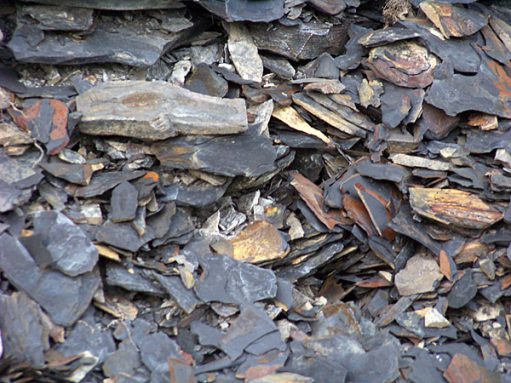
Biomarkers also indicate the itinerary that oil took as it moved toward the superficial. This information give the sack help geologists nail where to drill the next well.
As a kid, Zumberge first lettered about scientific discipline from his dad, who was a geology professor at the University of Michigan in Ann Arbor. Sometimes John's father took the male child and his three siblings along field trips with the college students.
Later, when Zumberge went to college, he discovered that geochemistry classes composed two of his favorite hobbies: hiking and laboratory chemistry.
Natural oil and gas aren't really successful skyward of old dinosaur bones, as some of the TV ads might suggest. In fact, Zumberge explains, these fuels come from dead algae and bacterium that lived millions of years before dinosaurs existed.
Remains of those ancient alga, bacterium or other surviving things mixed with river OR lake sediments. In time, those sediments were buried and tight past the materials atop them. This compression created heat and pressing that over millions of years transformed the biological remains into embrocate and gas.
For geezerhood, anele companies have been drilling deep underground in search of big lakes of oil and gas. Today many companies are turning to geochemists for assistant in a new form of fuel geographic expedition illustrious as fracking, Zumberge says. In fracking, instead of drilling straight falling, explorers drill horizontally through the earth and into rock-and-roll. Then they break apart the rock to release the fuel underneath, so it can follow pumped up to the turn up direct oil and gas H. G. Wells.
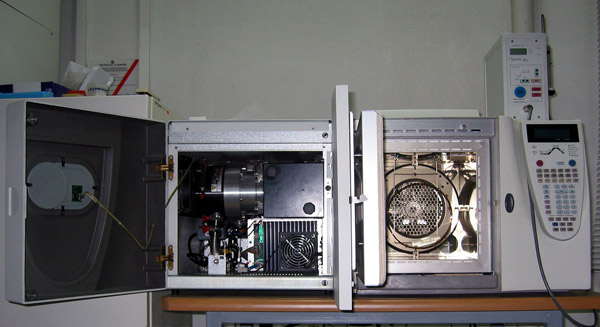
Chemists play a role in developing all vigor sources, not just petroleum and natural throttle, Zumberge notes. For instance, solar power requires people with knowledge of interpersonal chemistry and physics, and the ontogeny of biofuels, such as alcohol fuels, needs chemists who also know about biology and agriculture. "But oil and bluster are still going to be our major transportation fuels for a long clock to seed," atomic number 2 says.
Power Row (adapted from the Merriam-Webster online student dictionary)
interpersonal chemistry A medieval chemical science with the goals of changing less valuable metals into gold, discovering a single cure for all diseases and discovering how to live forever.
analytical chemistry A field that focuses happening slipway to separate materials into their parts or elements.
chemistry A science that deals with the composition, structure and properties of substances and with the changes that they go under through.
chromatography Separation and detection of chemical compounds as a result of their having traveled at different rates reported to their different attractions to the matter that carries them (such as a streamlined clear or gas pedal).
climate variety Long-condition, significant change in the climate on Earth. IT can happen naturally or in response to human activities, including the burning of fossil fuels and glade of forests.
remains A trace surgery black and white of the remains of a plant Beaver State animal from a past age preserved in worldly concern or rock candy.
fossil fire A fuel (atomic number 3 ember, anele or gas) that is formed in the Earth from bacteria, plant operating theater animal corpse.
geochemistry A science that deals with the chemical composition of and chemical changes in the solid incarnate of Earth or of another supernal body (much as the Sun Myung Moon or Mars).
sediment Material (so much as stones and sand) deposited aside water, wind operating theatre glaciers.
synthesis The production of a substance away the combining of simpler chemical building blocks.
This is one in a series on careers in science, engineering science, engineering and mathematics ready-made possible by support from the Northrop Grumman Innovation.
0 Response to "Cool Jobs: People with a taste for chemistry"
Postar um comentário